


Re-commerce: A New Era of Conscious Consumption
2026. April 2. 11:23
In recent years, global consumption patterns have undergone a fundamental structural shift. The convergence of post-pandemic market dynamics, inflationary pressures, and the mainstreaming of environmental consciousness has redirected consumers toward value-based, responsible alternatives (NIQ – The Green Divide Report). The acquisition of pre-owned assets is no longer a secondary market necessity; it is a strategic consumer choice. Advanced digital marketplaces have optimized transaction efficiency to the point where re-commerce often outperforms traditional retail in terms of convenience and lead times.
What is Re-commerce?
According to UST’s definition, re-commerce is the process of reselling items that were previously owned, refurbished, or returned to a retailer via trade-in programs. This business model not only offers more competitive pricing but also serves as a cornerstone of the circular economy. It helps extend product lifecycles, reduces waste, and mitigates environmental impact. While the most significant growth is seen in the electronics market, fashion, furniture, and automotive parts are also re-entering the consumer cycle in increasing volumes. The rising demand for refurbished phones and laptops clearly indicates that consumers are more open to high-quality, non-new products.
Re-commerce adoption is particularly high among younger generations. For Gen Z, the term "pre-loved" does not imply wear and tear, but rather a responsible consumer decision. Platforms like Vinted, Jófogás, or Vatera are no longer simple classified sites, but social ecosystems where sustainability meets product uniqueness. According to data from the eBay Re-commerce Report 2025, over 70% of buyers intend to increase their spending on secondary market goods in the coming years. Beyond affordability, the mitigation of environmental footprints and the acquisition of unique inventory are key drivers. Certified refurbished electronics are especially attractive as they are backed by warranties, providing a secure alternative.
How Does It Work?
Re-commerce appears in several forms. In C2C marketplaces, private individuals pass on their surplus assets through platforms such as Jófogás, Vatera, or Vinted. In the B2C model, the retailer reclaims the product, reconditions it, and resells it with a warranty; in Hungary, Rejoy and iSTYLE’s refurbished portfolio are prominent market players. Trade-inprograms, such as the exchange systems at Telekom or MediaMarkt, allow customers to receive a discount on new purchases by trading in legacy devices. Buy-back programs by IKEA and Decathlon are also gaining significant traction. In the background, B2B players like EuroPC or CHS Hungary handle refurbished business-grade hardware in bulk, while in the industrial sector, remanufacturing—returning components to original specifications—is becoming an increasingly standard practice.
Trade-in: A reverse logistics system where the consumer returns a used device (e.g., phone, laptop, tablet) to offset the cost of a new product. The retailer then refurbishes, resells, or harvests the legacy device for parts.
Buy-back: A process where the retailer repurchases used goods, typically at a fixed price or in exchange for vouchers. The product is then refurbished, resold, or sustainably repurposed.
Why Is It Beneficial?
The primary driver of re-commerce is the price-to-performance ratio. A refurbished device can be 20% to 50% cheaper than the MSRP of a new model, while warranties provide consumer security. According to Dissanayake’s 2026 research, re-commerce significantly reduces carbon emissions and e-waste, making environmental benefits a core value proposition. For enterprises, it creates new revenue streams; for consumers, it lowers the barrier to entry for premium technology.
The model still faces structural hurdles. Many consumers remain hesitant regarding the condition of pre-owned goods, particularly in the absence of standardized grading or warranties. Logistical complexities, such as reverse supply chain costs, diagnostic inspections, and returns management, can also impact scalability. In the fashion segment, sizing and subjective condition assessments create uncertainty, whereas the electronics market is more stable due to standardized testing protocols.
The Rapidly Strengthening Hungarian Market
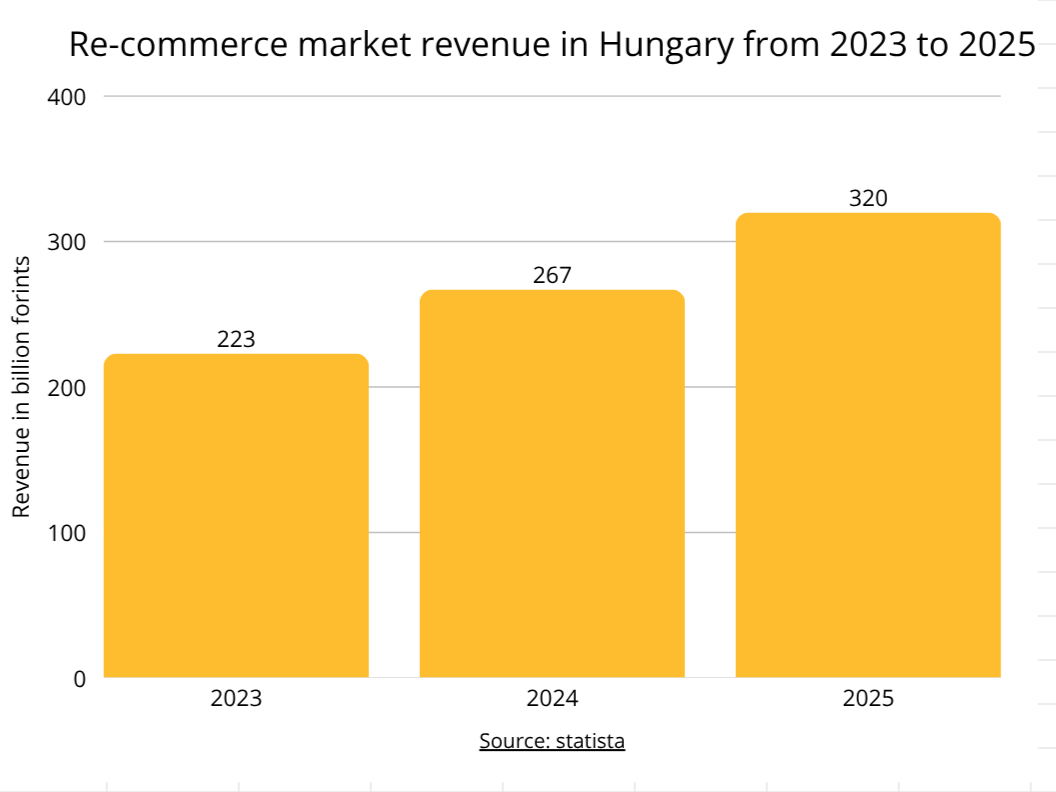
In Hungary, re-commerce is experiencing a period of rapid professionalization. High price sensitivity combined with evolving sustainability considerations makes the secondary market highly attractive. The markets for refurbished electronics, second-hand fashion, and remanufactured auto parts are expanding annually. With established players like Rejoy, iSTYLE Refurbished, and Háda, and the rapid dominance of Vinted, re-commerce has moved from a niche market to a mainstream economic force in Hungary.
Források:
- https://www.recommerce-group.com/en/news/our-news
- https://acowebs.com/recommerce-growth-second-hand-refurbished-online-shopping/
- https://www.ust.com/en/ust-explainers/what-is-recommerce
- https://www.sciencedirect.com/org/science/article/pii/S0959055226000069
- https://www.webofscience.com/wos/woscc/full-record/WOS:001571944900005
- https://www.mdpi.com/2071-1050/13/18/10242
- https://www.abacademies.org/articles/exploring-the-role-of-social-media-in-shaping-consumer-buying-behavior-a-factor-analysis-approach-9691.html
- https://www.mdpi.com/2071-1050/14/4/2154
- https://oander.hu/blog/a-re-commerce-felemelkedese/
- https://kosarertek.hu/konverzio/recommerce-ujra-felertekelodik-a-korforgasos-gazdasag-ostyaja/
- https://www.ebayinc.com/recommerce-report/
- https://nielseniq.com/global/en/insights/report/2023/how-to-turn-green-consumer-intentions-into-sustainable-actions/
- https://www.statista.com/statistics/1448371/hungary-re-commerce-market-revenue/