


Agricultural Economics and Management
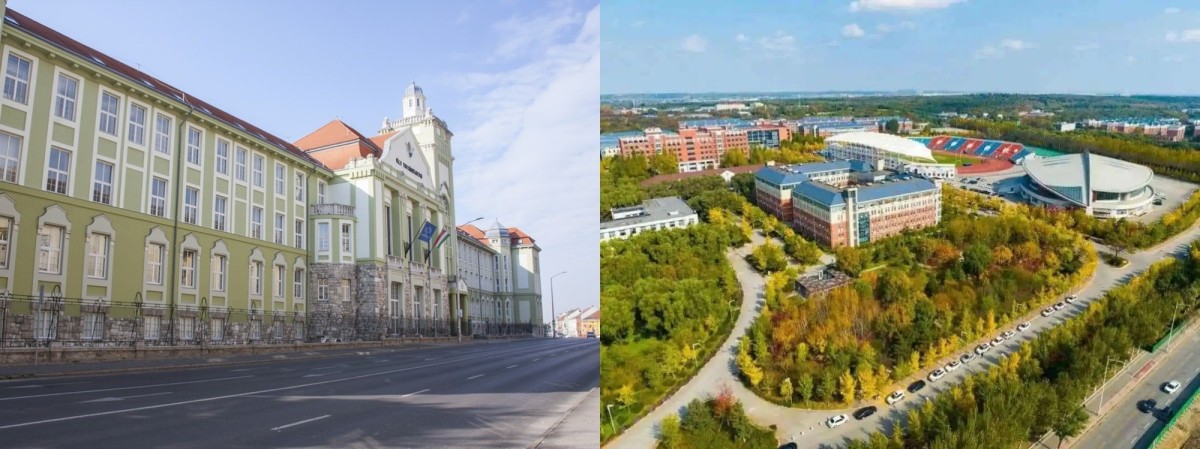
Joint Master Education Program In Agricultural Economics and Management between Shenyang Agricultural University and University of Pécs
Program Start Date: September of each year
Duration: 2 years (4 semesters), with a maximum completion period of 4 years.
Credits Hrs: 488
Credits: 120 (with a minimum of 30 credits to be completed per semester)
Program Introduction:
This program is deeply aligned with the core strategic needs of accelerating the building of an agricultural powerhouse and advancing comprehensive rural revitalization. It adheres to a training model that deeply integrates theory and practice, precisely focuses on key practical issues in the process of agricultural modernization, and is committed to cultivating a group of high-level research and management professionals who can lead the modernization transformation of the agricultural economy, promote the sustainable development of regional economy and rural finance, and closely meet the strategic needs of national rural revitalization.
Training Objectives:
The program aims to cultivate high-level interdisciplinary professionals with a solid foundation in advanced theories of Agricultural Economics and Management and Rural Sustainable Development, a strong commitment to agriculture, rural areas and farmers, and a global perspective. Graduates will be capable of applying advanced theories and analytical methods to address practical challenges related to rural revitalization, agricultural economic development, and sustainable rural development at regional, national, and global levels. They will possess interdisciplinary analytical skills and the ability to solve complex problems, enabling them to undertake scientific research, policy analysis, and professional management roles as highly qualified specialists in the field of agricultural and rural development.
Core Courses:
Economics, Statistics, Finance, Management, Economic Globalization, Regional Economic Integration, Leadership and Communication, Business Strategy, Social and Economic Statistical Analysis, Business Analysis and Valuation, Circular Economics, Innovation and Competitiveness of SMEs, Marketing and Market Access, Project Planning and Policy, etc.
Studies on Issues and Policies Related to Agriculture, Rural Areas and Farmers & Special Topics on Foreign Agricultural Economics, Frontier Topics in Rural and Regional Development, Poverty Analysis and Development Finance, Urbanization and Urban-Rural Integrated Planning, Rural Revitalization Management, Industrial Finance and Capital Operation, Project Management and Thesis.
Research Directions:
- Agricultural Economic Theory and Policy
- Agricultural Product Markets and Trade
- Land, Resources and Environmental Economics
- Food Economics and Management
- Agribusiness Management
- Development Management and Policy
- Regional Economics and Finance
- Food Security and Global Agricultural Governance
Admission Requirements:
Language Proficiency Requirement: Applicants must submit proof of English proficiency, meeting at least one of the following standards: a minimum TOEFL iBT score of 80, an IELTS overall band score of 6.0, or a Pearson Versant English Test score of 46.
Academic Qualification Requirement: Applicants must hold a bachelor's degree recognized by the Ministry of Education of China, or an equivalent educational qualification, with a minimum undergraduate cumulative grade point average (GPA) of 2.5 on a 4.0 scale.
Application Material Requirement: Applicants must submit a personal statement explaining their motivation for pursuing this program.
Graduation Requirements:
The curriculum of this program encompasses theoretical lectures, practical training, special lectures, and seminars. Students are required to attend all lectures and seminars and to strictly maintain attendance records.
The practical training component is a compulsory part of the program. Each student's total absences shall not exceed three times; students who exceed three absences must retake the course. Late arrival is treated as an absence.
Throughout the program, students will be assessed multiple times according to the course type. The assessments cover all content from previously taught topics or courses. Students who fail an assessment are allowed one re-examination opportunity.
Students must pass the assessments of compulsory and elective courses to earn the required credits, and shall obtain no fewer than 30 credits per semester in principle.
The degree thesis shall be completed independently by the student, systematically summarizing their academic research work and learning outcomes, and shall demonstrate the ability to collect, organize, and interpret relevant literature on a given problem, as well as to solve problems using established methods and to explain the observations. The thesis defense shall be conducted before a defense committee, or alternatively via video conference.
Award of Degree Certificate:
Upon completing all courses required by the program's courses and earning the prescribed 120 credits, students shall be awarded the Master of Science in International Economy and Business degree issued by the University of Pécs. The degree certificate is issued in both Hungarian and English.
Classroom Discipline and Examination Rules:
During class, students are strictly prohibited from using mobile phones to make or receive calls or to send text messages. Mobile phones must be turned off or set to silent mode.
Students are encouraged to actively participate in class discussions, to raise questions related to the topics under discussion, and to engage in problem-solving activities relevant to the course. Students shall not engage in conversations unrelated to the class, so as not to disrupt the teaching process.
If a student persistently disrupts the class, the instructor has the right to require that student to leave the classroom immediately.
The use of any electronic devices, artificial intelligence tools, textbooks, or any form of interaction among students is strictly prohibited during examinations. All electronic devices (including mobile phones, tablets, etc.) must not be placed within the student's reach (e.g., in pockets, on desks, etc.) during the examination.
Programme structure & Teaching Plan:
| Title of the subject | Subject Code | Subject type | Contact hrs. | Credit |
SEMESTER 1 | ||||
| Advanced International Economics | AEM001 | compulsory | 24 | 6 |
| Quantitative Research Methods | AEM002 | compulsory | 20 | 5 |
| Qualitative Research Methods | AEM003 | compulsory | 20 | 5 |
| Communication for Global Leaders | AEM004 | compulsory | 24 | 6 |
| Global Business Strategies | AEM005 | compulsory | 24 | 6 |
| Research on the Theory and Practice of Socialism with Chinese Characteristics | AEM006 | compulsory | 32 | 2 |
Semester 1 total: | 144 | 30 | ||
SEMESTER 2 | ||||
| Applied Statistics | AEM007 | compulsory | 24 | 6 |
| Economics in a Globalized World | AEM008 | compulsory | 24 | 6 |
| International Finance | AEM009 | compulsory | 24 | 6 |
| European Economic Integration | AEM010 | compulsory | 20 | 5 |
| International Business Environment | AEM011 | compulsory | 24 | 6 |
| Dialectics of Nature | AEM012 | compulsory | 16 | 1 |
Semester 2 total: | 132 | 30 | ||
SEMESTER 3 | ||||
| Project management* | AEM013 | specialization | 24 | 6 |
| Regional Economics* | AEM014 | specialization | 24 | 6 |
| Regional Development and Community Engagement* | AEM015 | specialization | 24 | 6 |
| Agricultural Marketing and Market Access | AEM016 | specialization | 24 | 6 |
| Responsible Tourism Planning and Policy | AEM017 | specialization | 24 | 6 |
| Agribusiness Management | AEM018 | specialization | 24 | 6 |
| Studies on “Agriculture, Rural Areas, and Farmers” Issues and Policies and Special Topics on Foreign Agricultural Economics | AEM019 | specialization | 24 | 6 |
| Frontier Topics on Rural and Regional Development | AEM020 | specialization | 24 | 6 |
| Poverty Analysis and Development Finance | AEM021 | specialization | 24 | 6 |
| Urbanization and Integrated Urban-Rural Planning | AEM022 | specialization | 24 | 6 |
| Rural Revitalization Management | AEM023 | specialization | 24 | 6 |
| Industrial Finance and Capital Operation | AEM024 | specialization | 24 | 6 |
Semester 3 total: | 120 | 30 | ||
SEMESTER 4 | ||||
| Social and Economic Statistical Analysis** | AEM025 | elective | 24 | 6 |
| Business Analysis and Valuation** | AEM026 | elective | 24 | 6 |
| Circular Economy** | AEM027 | elective | 24 | 6 |
| SME Innovation and Competitiveness in Global Markets** | AEM028 | elective | 24 | 6 |
| Business Language | AEM029 | compulsory | 12 | 3 |
| Capstone project development | compulsory | 32 | 15 | |
Semester 4 total: | 92 | 30 | ||
PROGRAMME TOTAL: | 488 | 120 | ||