


15. Corporate Talk recap - Rossmann
2026. June 3. 09:18
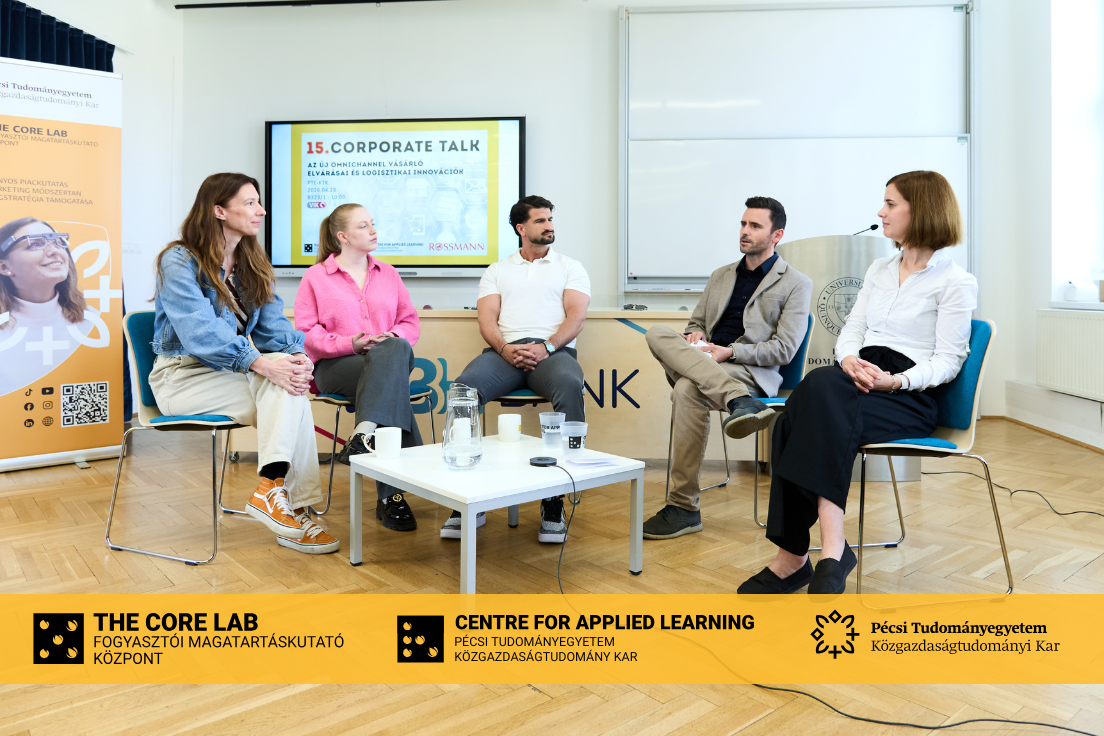
At the 15th Corporate Talk event, our guests were Anikó Miskovicz (Online Marketing Specialist), Zoltán Fodor (Head of Webshop Operations), and Nóra Sándor-Dávid (Technical Product Manager) from the Rossmann team.
Rossmann’s digital operations and the current market environment
Rossmann has an extensive retail presence in Hungary, operating 270 stores across 160 cities. Its webshop has been available since 2013 and now accounts for 6–8% of total revenue, which represents a significant share for a company with a primarily offline focus. The drugstore market is highly competitive and price-sensitive, while consumer expectations continue to rise regarding logistics, service development, and app experience.
Changing consumer awareness and behavior
“Consumer awareness” can mean many different things to shoppers, including price sensitivity, attention to product ingredients, or environmental considerations. During periods of high inflation, price consciousness becomes more dominant, increasing the importance of loyalty programs. As economic conditions stabilize, emotional brand value and customer experience may become stronger differentiating factors.
According to Rossmann’s research, consumers increasingly rely on the mobile application for product information and promotions, where they can easily compare prices, delivery times, and product availability.
The app as the core element of the omnichannel strategy
A few years ago, desktop usage dominated customer interactions (approximately a 60–40 split), but app usage has now increased to 72–73%. This shift has been supported by new features such as personalized routines, virtual mirror functions, and seasonal gamification elements that create a more experience-driven platform.
Consumer purchasing behavior also differs across channels. While physical stores primarily generate sales in personal care categories, online purchases are dominated by baby products (representing approximately one-third of orders), household products, pet food, healthy food options, and larger coffee packages. As a result, online and offline channels complement each other effectively by serving different consumer needs.
Click & Collect allows customers to place orders online and collect products in-store within as little as 90 minutes, providing a fast and convenient solution while frequently generating additional in-store purchases.
Continuous development and innovation
Rossmann continues to invest in multiple development areas aimed at further improving customer experience, including faster logistics, personalized recommendations, and expanded digital functionalities. Although not all developments are public yet, the discussion clearly demonstrated that the company is simultaneously responding to market demands while actively shaping its own innovation strategy.
Conclusion
The discussion highlighted how a company can build its operations around understanding everyday consumer decisions and use these insights to continuously transform its business model. At Rossmann, online and offline channels are not separate systems but interconnected elements that reinforce each other through continuous development and digital innovation. The company’s vision is clear: creating a customer experience that is fast, personalized, and consistent across every touchpoint.