


Interview with Denis Dolinar - International Teaching Week
2026. június 2. 08:20
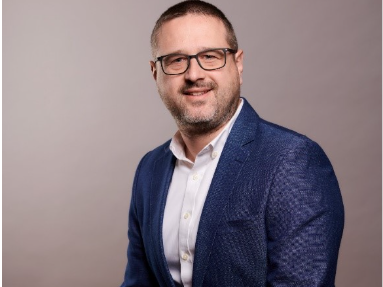
In the world of high-stakes finance, the distance between textbook theory and market reality can often feel like a canyon. For Denis Dolinar, an associate professor at the University of Zagreb’s Faculty of Economics and Business, bridging that gap is not just a profession, it is a lifelong passion. He had recently attended this year’s International Teaching Week at the University of Pécs Faculty of Business and Economics (UPFBE).
From Student Mentor to Associate Professor
Denis Dolinar’s path to become an associate professor was paved by a genuine love for mentorship. "While I was a student, I loved helping my student colleagues with their coursework," he recalls, noting a particular early interest in corporate finance and investing.
After graduation, Dolinar entered the financial sector as an equity analyst, yet he never truly left the academic world. He maintained a role as an external teaching assistant at his alma mater until the opportunity arose to join the faculty permanently. This blend of practical industry experience and academic rigor now defines his teaching style.
The Core of Finance
At the University of Zagreb, Dolinar leads two cornerstone courses: Corporate Finance and Investments. While they may seem distinct, he views them as two sides of the same coin. Previous focuses on how companies strategically raise and deploy capital to maximize firm value while balancing risk against funding costs. On the other hand, Investment concentrates on the valuation of securities, such as stocks, bonds and derivatives and also the strategic allocation of capital within portfolios. "In essence," Dolinar explains, "both courses explore the fundamental trade-off between risk and return".
Insights from the 2026 International Teaching Week
In April 2026, Dolinar travelled to Hungary for the International Teaching Week. For him, the event was more than just a series of lectures, it was a "vibrant networking" experience that bridged international borders.
"I was impressed with the level of student engagement in debates. Their questions revealed a deep curiosity about how certain textbook theories can be translated into practical problem-solving."
During the week, he stepped beyond basic principles. Recognizing that the UPFBE students were already well-versed in modern portfolio theory, he pushed the curriculum toward advanced, "real-world" applications, including goal-based investing and the mechanics of making efficient portfolios in practice. The result was a dynamic environment where students analysed theories through the lens of current global market uncertainties.
Discovering Pécs
Beyond the classroom, Dolinar found himself captivated by the cultural landscape of Hungary. He describes it as a nation where "deep historical roots are cherished with pride," yet noted that the city of Pécs offered a surprisingly modern and open atmosphere for international guests.
"The architecture of downtown Pécs is nothing short of breathtaking," he remarks, adding that the local hospitality, often featuring rich cuisine and excellent wine, made the experience truly memorable.
Looking Ahead
As the academic year continues, Professor Dolinar remains committed to fostering meaningful interactions that go beyond standard academic approaches. His positive experience at UPFBE has already set the stage for the future: "I look forward to participating in the International Teaching Week again next year".
For students and professionals alike, Dolinar’s journey serves as a reminder that whether in a classroom in Zagreb or a lecture hall in Pécs, the most valuable lessons are those that find the balance between theory and the unpredictable pulse of the global market.
Nagy Virág